Advantages of Tungsten Copper Alloy
Tungsten copper alloy is a two-phase composite material typically manufactured through powder metallurgy and copper infiltration. Tungsten provides high melting point, high hardness, and low thermal expansion, while copper contributes good electrical and thermal conductivity. Adjustable tungsten-to-copper ratios allow the material's physical and mechanical properties to be tailored to different requirements, making it suitable for electrical contacts, electrodes, electronic packaging, and components exposed to high thermal loads. The following are the main advantages of tungsten copper alloy.
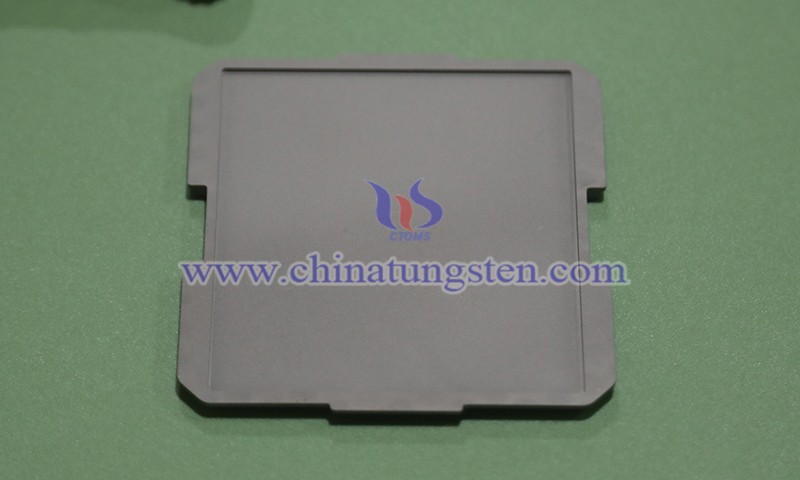
Advantages of CTIA's Tungsten Copper Alloy
1. Good Electrical and Thermal Conductivity for Current Transmission and Heat Dissipation
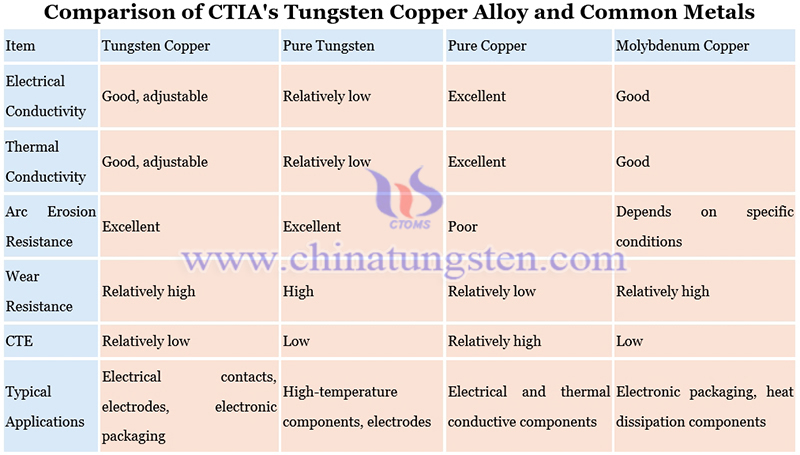
The copper phase in tungsten copper alloy forms conductive pathways for efficient transmission of electrical current and heat. Compared with pure tungsten, tungsten copper alloy offers better electrical and thermal conductivity, making it suitable for high-current electrical contact components and electronic heat dissipation devices.
2. Excellent Arc Erosion Resistance for High-Voltage Switch Contacts
Tungsten's excellent high-temperature resistance improves the material's ability to withstand arc erosion. The copper phase transfers heat, while the tungsten phase helps maintain structural stability under arc exposure, reducing contact damage and material loss. These properties make tungsten copper alloy suitable for high-voltage switches, vacuum circuit breakers, and surge protective devices.
3. High Hardness and Strength, Offering Good Wear Resistance
Tungsten copper alloy offers high hardness, compressive strength, and flexural strength, enabling it to withstand mechanical loads and repeated contact wear. These properties make it suitable for resistance welding electrodes, electrical contacts, and other components subject to contact pressure.
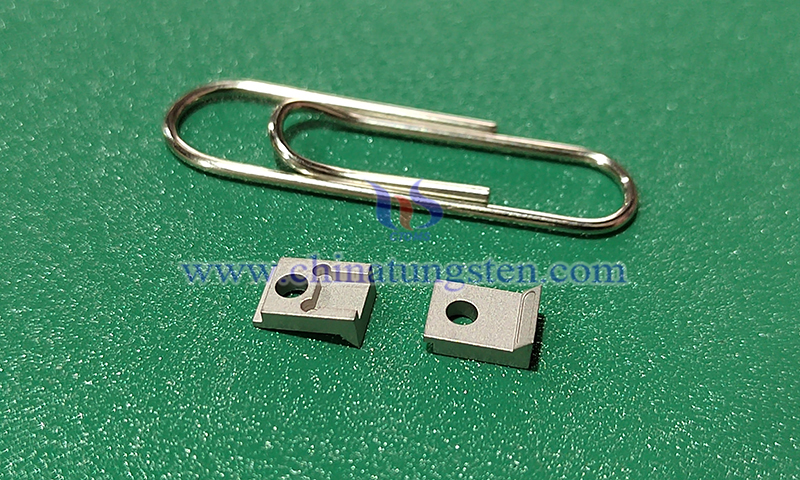
4. Low Thermal Expansion and Good Dimensional Stability
The coefficient of thermal expansion of tungsten copper alloy is lower than that of pure copper, helping reduce dimensional deviations and thermal deformation caused by temperature changes. Typical materials have coefficients of thermal expansion of approximately 6.5–10.9 × 10⁻⁶/K, with actual values varying according to tungsten-to-copper ratio and test temperature. This property helps maintain thermal compatibility between electronic packaging substrates, chip heat dissipation components, and semiconductor devices.
5. Adjustable Tungsten-to-Copper Ratios for Different Performance Requirements
The tungsten and copper mass fractions can be adjusted to control density, electrical conductivity, thermal conductivity, hardness, and coefficient of thermal expansion. For example, CuW70 contains approximately 70% tungsten and 30% copper, while CuW80 contains approximately 80% tungsten and 20% copper. Generally, higher tungsten content increases density, hardness, and arc erosion resistance, while electrical and thermal conductivity decrease.
6. Stable High-Temperature Performance for Complex Thermal Loads
Tungsten's high melting point and low vapor pressure make tungsten copper alloy suitable for arc exposure, high-temperature environments, and high heat flux conditions. Heat conduction through the copper phase helps reduce localized heat accumulation and improve thermal transfer within components. These characteristics make the material suitable for high-voltage switch contacts, plasma-related electrodes, and other components exposed to repeated thermal shock.
7. Flexible Machining and Structural Customization for Precision Components
Tungsten copper alloy can be machined into plates, rods, tubes, rings, discs, and components with special geometries to meet different installation space and assembly requirements. Comparison of CTIA's tungsten copper alloy and common metals is shown in the picture below:
CTIA GROUP has nearly 30 years of experience in tungsten copper alloy manufacturing, with extensive expertise in powder metallurgy and precision machining. CTIA offers material selection, composition design, structural customization, and precision machining to meet the electrical, thermal, mechanical, and arc erosion resistance requirements of electrical contacts, electrodes, and electronic packaging components.
For any inquiry, please contact tungsten copper manufacturer: CTIA GROUP
Email: sales@chinatungsten.com
Tel: 0086 592 5129696 / 0086 592 5129595
Website: tungsten-copper.com
WeChat: