Tungsten-Copper Alloy FAQ
Tungsten-Copper Alloy FAQ
Q1. What is tungsten-copper alloy? What are the main characteristics of tungsten-copper alloy?
Tungsten-copper alloy (W-Cu) is a metal composite material with tungsten (W) and copper (Cu) as its main constituent elements. It combines the high melting point, high hardness, and good resistance to arc erosion of tungsten with the high electrical conductivity and high thermal conductivity of copper. It is usually not formed by ordinary melting to completely mix tungsten and copper into a uniform solid solution; instead, taking advantage of the differences in melting point and mutual solubility between the two metals, it is prepared through processes such as powder metallurgy and copper infiltration of tungsten skeletons. Tungsten-copper alloy can maintain good comprehensive performance under working conditions such as high temperature, high current, high heat flux density, and repeated arc action, and is therefore widely used in fields such as electrical switch contacts, resistance welding electrodes, electrical discharge machining electrodes, electronic packaging, and thermal management of high-power devices.
I. Main characteristics of tungsten-copper alloy
Good high-temperature resistance
The melting point of tungsten is approximately 3422°C, giving it excellent high-temperature stability. The tungsten phase in tungsten-copper alloy can maintain structural stability in high-temperature environments and is suitable for high thermal load and arc action environments. However, the melting, migration of the copper phase, and the overall thermal stress of the material can still affect the actual service temperature; the melting point of tungsten cannot simply be regarded as the service temperature of tungsten-copper alloy.
Good electrical conductivity
Copper has high electrical conductivity and can provide tungsten-copper alloy with good electrical conduction capability. Compared with pure tungsten, tungsten-copper alloy is more suitable for electrical components that need to combine resistance to arc erosion with electrical conductivity. Its electrical conductivity is affected by factors such as tungsten content, porosity, density, microstructural uniformity, and processing state.
Good thermal conductivity
The copper phase helps conduct heat, enabling tungsten-copper alloy to be used in high-power electronic devices, heat sinks, and thermal management parts. Reasonable selection of the tungsten-copper ratio helps achieve a balance among thermal conductivity, thermal expansion matching, and structural stability.
Outstanding resistance to arc erosion
Tungsten has a high melting point and good resistance to high-temperature erosion, while copper helps conduct electricity and dissipate heat. Combined, the material can adapt to working conditions with repeated arc action and is therefore often used in high-voltage or medium-high-voltage electrical switch contacts, vacuum electrical components, and other parts that need to withstand arc impact. Actual service life also depends on current level, breaking conditions, contact pressure, and material grade.
High hardness and good wear resistance
The tungsten phase can increase the hardness and deformation resistance of the material, making tungsten-copper alloy suitable for some high-load electrodes and wear-resistant parts. Generally, under otherwise similar conditions, increasing tungsten content increases hardness, but may also reduce electrical and thermal conductivity and increase processing difficulty.
Adjustable coefficient of thermal expansion
Tungsten has a low coefficient of thermal expansion, while copper has a high coefficient of thermal expansion. By adjusting the ratio of the two, the thermal expansion characteristics of tungsten-copper alloy can be adjusted within a certain range, making it suitable for electronic packaging and precision structural parts that require control of thermal deformation, reduction of thermal stress, or thermal expansion matching with other materials.
II. How does the composition ratio of tungsten-copper alloy affect performance?
III. What are the limitations of tungsten-copper alloy?
IV. In which fields are tungsten-copper alloys mainly applied?
V. How to reasonably select tungsten-copper alloy?
Q2. Is tungsten-copper alloy an alloy or a metal composite?
Tungsten-copper alloy can be called an alloy in the industrial field, and can also be classified as a metal composite from the perspective of materials science and microstructure. More rigorously, conventional tungsten-copper materials usually belong to two-phase metal composites composed of a tungsten phase and a copper phase, rather than typical single-phase solid-solution alloys…
Q3. What elements does tungsten-copper alloy consist of? What roles do tungsten and copper play respectively?
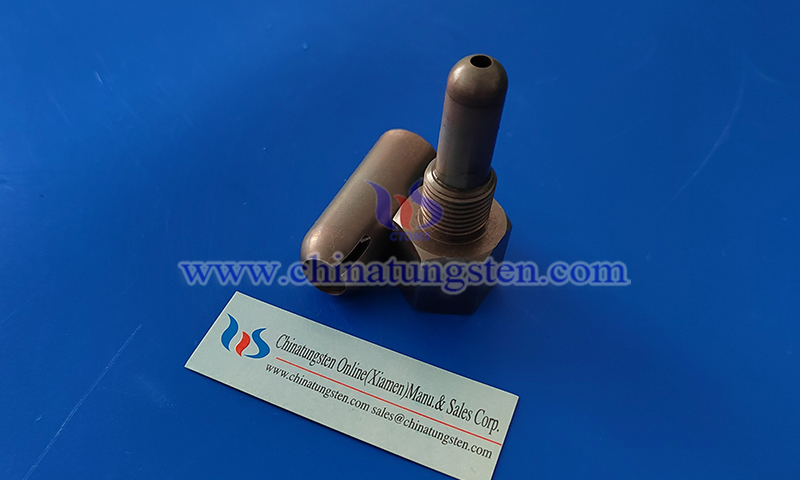
Tungsten-copper alloy (W-Cu) mainly consists of two elements, tungsten (W) and copper (Cu), and is a typical metal composite composed of a tungsten phase and a copper phase. Tungsten and copper each play different roles in the material: tungsten mainly provides a high melting point, high hardness, resistance to arc erosion, and a relatively low coefficient of thermal expansion, while copper mainly provides good electrical conductivity and thermal conductivity and helps transfer heat.
I. What elements does tungsten-copper alloy consist of?
II. What roles do tungsten and copper play respectively?
Main role of tungsten in tungsten-copper alloy
Tungsten is an important component in tungsten-copper alloy that bears the functions of high-temperature resistance and ablation resistance. The melting point of tungsten is approximately 3422°C, and it has relatively high hardness, good high-temperature stability, and a relatively low coefficient of thermal expansion. In tungsten-copper alloy, tungsten mainly plays the following roles: (1) improving resistance to arc erosion, suitable for components such as electrical switch contacts that withstand arc impact. (2) Improving hardness and deformation resistance, helping the material maintain structural stability under certain mechanical loads. (3) Reducing the coefficient of thermal expansion of the material, suitable for precision parts that require dimensional stability and thermal expansion matching. (4) Improving structural stability under high-temperature working conditions, but the actual service temperature is still limited by the copper phase, microstructure, and working environment. Generally, under otherwise similar conditions, increasing tungsten content helps increase hardness and reduce the coefficient of thermal expansion, but may also increase processing difficulty and reduce the electrical and thermal conductivity of the material.
Main role of copper in tungsten-copper alloy
Copper is an important component in tungsten-copper alloy that bears the functions of electrical and thermal conduction. The melting point of copper is approximately 1084.6°C, and it has good electrical conductivity and thermal conductivity, helping the material transmit current and dissipate heat. In tungsten-copper alloy, copper mainly plays the following roles: (1) improving electrical conductivity to meet the conductive requirements of components such as electrodes and electrical contacts. (2) Improving thermal conductivity, helping heat transfer away from local high-temperature areas. (3) In the copper infiltration of tungsten skeleton process, molten copper can enter the pores of the tungsten skeleton to form a dense composite structure. (4) By adjusting copper content, regulating the electrical and thermal conductivity of the material and its overall comprehensive performance. When copper content is relatively high, the material usually has better electrical and thermal conductivity, but arc erosion resistance, hardness, and thermal expansion control capability also need to be evaluated in combination with the specific grade.
III. How do tungsten and copper cooperate with each other?
IV. Why is the ratio of tungsten to copper important?
Q4. Why is tungsten-copper alloy usually manufactured by powder metallurgy?
Tungsten-copper alloy (W-Cu) is usually manufactured by powder metallurgy, mainly because the melting points of tungsten and copper differ greatly and their mutual solubility under conventional conditions is extremely low, making it difficult to obtain materials with uniform composition and dense microstructure through ordinary melting and casting. Powder metallurgy can separately control the composition and distribution of the tungsten phase and copper phase, and through processes such as pressing, sintering, and copper infiltration, enable the two metals to form a composite structure with good comprehensive performance.
I. The physical properties of tungsten and copper differ greatly
II. Why is powder metallurgy suitable for tungsten-copper alloy?
III. Common powder metallurgy manufacturing processes for tungsten-copper alloy
IV. What impact does the powder metallurgy process have on the performance of tungsten-copper alloy?
V. Why not directly use ordinary melting processes?
Q5. What are the differences between tungsten-copper alloy, pure tungsten, and pure copper?
The main differences among tungsten-copper alloy (W-Cu), pure tungsten (W), and pure copper (Cu) lie in material composition, electrical and thermal conductivity, high-temperature resistance, hardness, thermal expansion characteristics, and applicable working conditions. Tungsten-copper alloy combines the different properties of tungsten and copper to achieve a balance among arc erosion resistance, electrical conductivity, thermal conductivity, and dimensional stability. Pure tungsten is more suitable for occasions that emphasize high melting point, hardness, and high-temperature stability, while pure copper is more suitable for applications that emphasize high electrical conductivity and high thermal conductivity.
I. Core differences among the three materials
II. What are the differences between tungsten-copper alloy and pure tungsten?
III. What are the differences between tungsten-copper alloy and pure copper?
IV. Why does the tungsten-copper ratio affect material performance?
V. How should selection be made in practical applications?
Q6 What are the differences between tungsten-copper alloy, molybdenum-copper alloy, and silver-tungsten alloy?
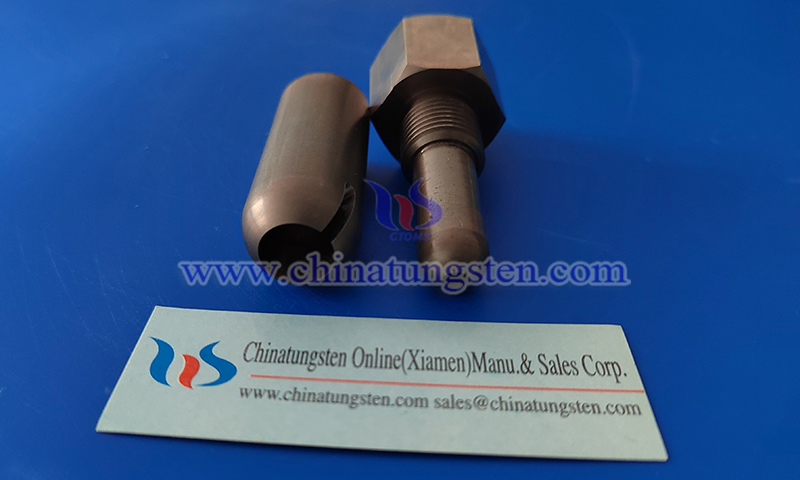
Tungsten-copper alloy (W-Cu), molybdenum-copper alloy (Mo-Cu), and silver-tungsten alloy (Ag-W) all belong to composite materials composed of refractory metals and conductive metals, and are often manufactured through processes such as powder metallurgy, sintering, or metal infiltration. However, the three differ significantly in composition, performance focus, and application scenarios. Tungsten-copper alloy mainly utilizes the arc erosion resistance of tungsten and the electrical and thermal conductivity of copper, and is suitable for electrical contacts, electrodes, and thermal management components; molybdenum-copper alloy mainly utilizes the low thermal expansion characteristics of molybdenum and the thermal conductivity of copper, and is commonly used in electronic packaging and heat dissipation substrates for power devices; silver-tungsten alloy combines the high electrical conductivity of silver with the arc erosion resistance of tungsten, and is commonly used in electrical contacts that have high requirements for contact resistance, resistance to welding, and arc performance.
Tungsten-Copper Alloy FAQ
Contents
Part One
Fundamentals, Grade Properties, and Manufacturing Processes of Tungsten-Copper Alloys
I. Fundamentals of Tungsten-Copper Alloys
1. What is tungsten-copper alloy? What are its main characteristics?
2. Is tungsten-copper alloy an alloy or a metal composite?
3. What elements make up tungsten-copper alloy? What roles do tungsten and copper each play?
4. Why is tungsten-copper alloy usually manufactured by powder metallurgy?
5. What are the differences between tungsten-copper alloy and pure tungsten and pure copper?
6. What are differences between tungsten-copper alloy and molybdenum-copper alloy & silver-tungsten alloy?
7. What are the differences between tungsten-copper alloy and tungsten-nickel-iron heavy alloy?
8. What are the main classifications and application fields of tungsten-copper alloy?
II. Grades and Compositions of Tungsten-Copper Alloys
9. What are the common grades of tungsten-copper alloy?
10. What is the difference between W70Cu30 and W80Cu20?
11. What scenarios are W50Cu50, W60Cu40, and W90Cu10 respectively suitable for?
12. How are the tungsten content and copper content in tungsten-copper alloy determined?
13. Does higher tungsten content mean better overall performance of tungsten-copper alloy?
14. How to choose the tungsten-copper ratio based on electrical conductivity, thermal conductivity, and arc resistance requirements?
15. What do the numbers in tungsten-copper alloy grades represent? Are grades from different manufacturers interchangeable?
17.Why may the actual chemical composition of tungsten-copper alloy differ from the nominal composition?
III. Physical Properties of Tungsten-Copper Alloys
18. What is the density of tungsten-copper alloy? What are the differences among different grades?
19. How to calculate weight based on the dimensions and density of tungsten-copper alloy?
20. What are the electrical conductivity and resistivity of tungsten-copper alloy?
21. What is IACS (International Annealed Copper Standard) conductivity?
22. What is the thermal conductivity of tungsten-copper alloy? What factors affect thermal conductivity?
23. What is the coefficient of thermal expansion of tungsten-copper alloy?
24. What are the hardness, flexural strength, and tensile strength of tungsten-copper alloy?
25. What about the melting behavior, high-temperature resistance, and arc erosion resistance of tungsten-copper alloy?
26. Why are the density, electrical conductivity, and thermal conductivity of tungsten-copper alloy affected by porosity and manufacturing processes?
27. How to correctly compare the performance data of tungsten-copper alloys provided by different manufacturers?
IV. Manufacturing Processes of Tungsten-Copper Alloys
28. What are the main manufacturing processes for tungsten-copper alloy?
29. What is the infiltration method for tungsten-copper alloy? What is its basic process flow?
30. What is the difference between the infiltration method and the mixed-powder sintering method?
31. Why does tungsten-copper alloy require the preparation of a porous tungsten skeleton?
32. How do tungsten powder particle size, copper powder particle size, and mixing uniformity affect product performance?
33. How do sintering temperature, time, and atmosphere affect the microstructure of tungsten-copper alloy?
34. How to improve the density of tungsten-copper alloy and reduce porosity?
35. Why does tungsten-copper alloy exhibit uneven copper phase distribution, pores, cracks, or delamination?
36. How can the electrical and thermal conductivity of tungsten-copper alloy be improved through process optimization?
37. How do manufacturing processes affect production cost and product consistency?
Part Two
Core Applications, Processing, and Customization of Tungsten-Copper Alloys
V. Tungsten-Copper Alloy Electrodes and Electrical Machining
38. Why is tungsten-copper alloy suitable for making electrical discharge machining electrodes?
39. What are the differences between tungsten-copper alloy electrodes and graphite electrodes and pure copper electrodes?
40. Which is more suitable for electrical discharge machining, W70Cu30 or W80Cu20?
41. hat factors affect the wear rate and service life of tungsten-copper alloy electrodes?
42. Is tungsten-copper alloy suitable for machining cemented carbide and high-hardness mold steel?
43. How to improve the machining accuracy and surface quality of tungsten-copper alloy electrodes?
VI. Tungsten-Copper Alloy Electrical Contacts and Resistance Welding
44. Why is tungsten-copper alloy suitable for electrical contacts?
45. What are the differences between tungsten-copper alloy contacts and silver-tungsten contacts and copper-chromium contacts?
46.What switchgear and high-current conditions is tungsten-copper alloy suitable for?
47. How do tungsten-copper alloy contacts resist arc erosion and extend service life?
48. Compared with chromium-zirconium copper, which is more suitable for resistance welding electrodes?
49. How to evaluate the contact resistance, breaking performance, and reliability of tungsten-copper alloy contacts?
VII. Tungsten-Copper Alloy Semiconductor Heat Dissipation and Electronic Packaging
50. Why is tungsten-copper alloy suitable for electronic packaging and thermal management?
51. What is a tungsten-copper alloy heat sink? What electronic devices is it mainly used for?
52. What are the differences between tungsten-copper heat sinks and molybdenum-copper heat sinks?
53. How does tungsten-copper alloy match the coefficient of thermal expansion of ceramic substrates or semiconductor chips?
54. How to select tungsten-copper alloy grades based on thermal conductivity, coefficient of thermal expansion, and thermal resistance?
55. What thermal cycling and reliability tests are required for tungsten-copper alloy electronic packaging components?
VIII. Processing and Customization of Tungsten-Copper Alloys
56. Can tungsten-copper alloy be machined by turning, milling, drilling, and tapping?
57. Is tungsten-copper alloy suitable for electrical discharge machining and wire cutting?
58. How to control dimensional tolerance, flatness, parallelism in precision machining of tungsten-copper alloy?
59. Can tungsten-copper alloy undergo grinding, polishing, and surface coating treatment?
60. Can tungsten-copper alloy be joined with copper, ceramics, or other metals?
61. What drawings, dimensions, & technical parameters are required to customize tungsten-copper alloy parts?
62. How to control machining deformation, surface defects, & material loss in complex tungsten-copper alloy parts?
63. What factors determine the production cycle and processing cost of custom tungsten-copper alloy products?
Part Three
Standards, Quality, Procurement, & Industry Analysis of Tungsten-Copper Alloys
IX. Quality Inspection and Standards for Tungsten-Copper Alloys
64. How to test the chemical composition, density, and porosity of tungsten-copper alloy?
65. How should the electrical conductivity, thermal conductivity, & hardness of tungsten-copper alloy be tested?
66. How to perform metallographic structure analysis and non-destructive testing of tungsten-copper alloy?
67. Which tungsten-copper materials does ASTM B702 (American Society for Testing and Materials standard, Standard Specification for Copper-Tungsten Electrical Contact Material) apply to?
68. What standards and test methods should be referred to when purchasing tungsten-copper alloy?
69. What information should the material certificate & factory inspection report of tungsten-copper alloy include?
70. How to troubleshoot when tungsten-copper alloy products have substandard electrical conductivity, copper exudation, or internal cracks?
71. How to establish a batch traceability and quality control system for tungsten-copper alloy products?
X. Procurement and Supplier Evaluation of Tungsten-Copper Alloys
72. What factors determine the price of tungsten-copper alloy?
73. How do tungsten content, product size, and machining precision affect procurement cost?
74. Why are the prices of tungsten-copper alloy blanks and precision-machined finished products different?
75. How to compare the quotations and performance data of tungsten-copper alloy provided by different suppliers?
76. How to judge the production capacity and quality management level of tungsten-copper alloy suppliers?
77. What key technical indicators need to be confirmed when purchasing tungsten-copper alloy?
78. How should sample testing, trial production verification, and batch acceptance of tungsten-copper alloy be arranged?
79. How to reduce quality, delivery, and supply risks in tungsten-copper alloy procurement?
XI. Tungsten-Copper Alloy Industry and Future Development
80. What are the main application fields and demand drivers of tungsten-copper alloy globally?
81. What are the advantages of China's tungsten-copper alloy industry chain?
82. How do changes in the prices of tungsten powder and copper raw materials affect the cost of tungsten-copper alloy?
83. What are the main technical barriers and quality barriers in the tungsten-copper alloy industry?
84. What development opportunities exist for tungsten-copper alloy in power equipment, semiconductors, and high-power electronics?
85. How will the substitution relationship between tungsten-copper alloy & other composite materials develop?
86. How can tungsten-copper scrap be recycled? Can recycled materials be used in high-performance products?
87. How will the future manufacturing processes, material properties, and application technologies of tungsten-copper alloy be upgraded?
Read More: The Most Important Q&A About Tungsten-Copper Alloy.pdf
For any inquiry, please contact tungsten copper manufacturer: CTIA GROUP
Email: sales@chinatungsten.com
Tel: 0086 592 5129696 / 0086 592 5129595
Website: tungsten-copper.com
WeChat: