Tungsten Copper Alloy vs. Pure Copper
The main differences between tungsten copper alloy and pure copper lie in their material composition, manufacturing processes, and overall properties. Pure copper is a single-metal material characterized by high electrical conductivity, high thermal conductivity, and good plasticity. Tungsten copper alloy, by contrast, is a metal composite consisting of tungsten and copper. It retains a certain level of electrical and thermal conductivity while offering higher hardness, better arc erosion resistance, and lower coefficient of thermal expansion. The two materials have different performance characteristics and are suited to different applications. CTIA uses powder metallurgy, liquid-phase sintering, and copper infiltration to produce tungsten copper alloys with different performance grades by adjusting the tungsten-to-copper ratio, meeting material requirements in power equipment, electronic packaging, electrical discharge machining, and high-temperature industrial equipment.
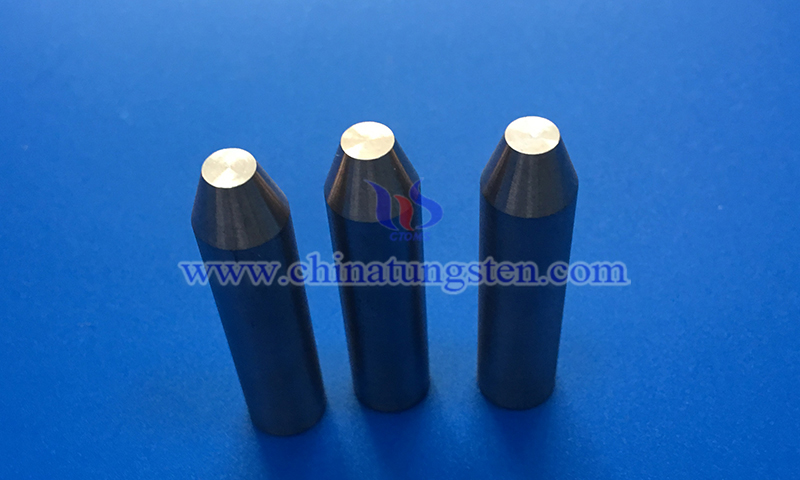
Differences Between Tungsten Copper Alloy and Pure Copper
1. What's Tungsten Copper Alloy? What's Pure Copper?
Tungsten copper alloy (WCu) is composite material composed of two metals, tungsten and copper, belonging to pseudo-alloy and typically manufactured via powder metallurgy process. CTIA adopts process such as tungsten powder pressing, liquid phase sintering, and copper infiltration, controlling tungsten-to-copper ratio and material density to produce tungsten copper alloy of different grades including W50Cu50, W70Cu30, W75Cu25, W80Cu20, and W90Cu10, meeting requirement of different product for electrical conductivity, thermal conductivity, hardness, density, and high-temperature resistance.
Pure copper is metal material with copper element as main component, where copper content typically reaches over 99.9%. Pure copper is mainly manufactured via melting, casting, and subsequent rolling and drawing process, featuring good electrical conductivity, thermal conductivity, plasticity, and ductility. Common product includes copper plate, copper rod, copper tube, copper busbar, and copper wire.
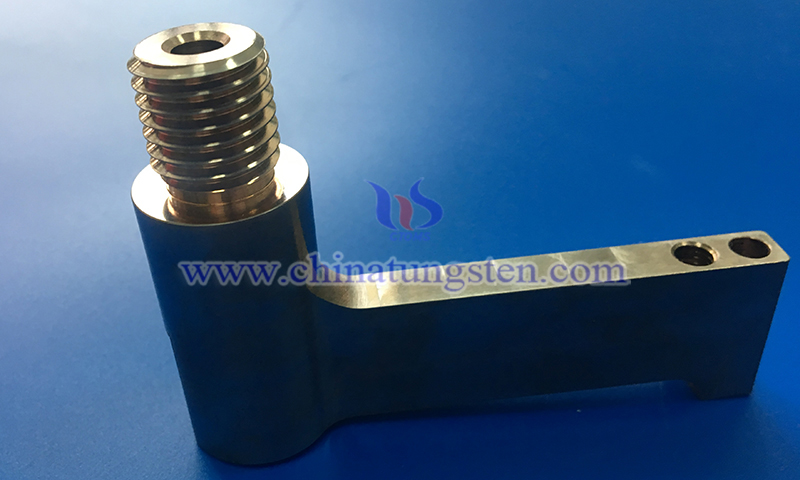
2. Main Property Differences Between Tungsten Copper Alloy and Pure Copper
Performance difference between tungsten copper alloy and pure copper is mainly reflected in following aspect:
(1) Material Composition and Ratio: Tungsten copper alloy consists of two metals, tungsten and copper, with tungsten content typically ranging from 50% to 90% and copper content from 10% to 50%. CTIA can adjust tungsten-to-copper ratio according to product performance requirement to control material density, hardness, electrical conductivity, and coefficient of thermal expansion. Pure copper is composed primarily of copper element, and its performance depends mainly on copper purity and processing condition.
(2) Density: Density of tungsten copper alloy is typically around 12–17 g/cm³, increasing with higher tungsten content. Density of pure copper is around 8.96 g/cm³. Higher density of tungsten copper alloy makes it suitable for component with special requirement on material mass, structural dimension, and mechanical property.
(3) Electrical Conductivity: Pure copper exhibits excellent electrical conductivity, with conductivity of standard annealed copper around 100% IACS. Electrical conductivity of tungsten copper alloy is closely related to copper content and is typically lower than that of pure copper. Increasing copper content helps improve electrical conductivity of tungsten copper alloy, but simultaneously affects hardness, density, and high-temperature resistance, so material ratio must be selected based on specific working condition.
(4) Thermal Conductivity: Pure copper features high thermal conductivity, suitable for application requiring rapid heat transfer and dissipation. Thermal conductivity of tungsten copper alloy varies with tungsten-to-copper ratio; although typically lower than that of pure copper, it offers lower coefficient of thermal expansion and better thermal stability, suitable for electronic packaging and high-temperature thermal management structure.
(5) Hardness and Mechanical Property: Tungsten copper alloy utilizes high hardness and high strength of tungsten phase, offering good compressive strength, wear resistance, and deformation resistance, suitable for component subjected to mechanical load and arc action. Pure copper is relatively soft with good plasticity and ductility, making it easy to undergo stamping, bending, and drawing processing, though its hardness and wear resistance are relatively low.
(6) High-Temperature Resistance and Arc Erosion Resistance: Melting point of tungsten is around 3422℃, exhibiting excellent high-temperature strength and ablation resistance. Tungsten copper alloy utilizes high-temperature-resistant skeleton formed by tungsten phase, combined with electrical conduction, thermal conduction, and cooling effect of copper phase, providing good erosion resistance under arc and high-temperature environment. Melting point of pure copper is around 1084.6℃, making it prone to softening and melting under high-temperature condition and limiting its use under strong arc and high-temperature shock environment.
(7) Coefficient of Thermal Expansion: Coefficient of thermal expansion of tungsten copper alloy is typically around 6–10×10⁻⁶/K and can be adjusted according to tungsten-to-copper ratio. Coefficient of thermal expansion of pure copper is around 16.5–17×10⁻⁶/K. Lower coefficient of thermal expansion of tungsten copper alloy makes it easier to achieve thermal expansion matching with silicon, ceramic, and other electronic packaging material, reducing interface stress caused by temperature change.
3. Performance Comparison of Tungsten Copper Alloy and Pure Copper
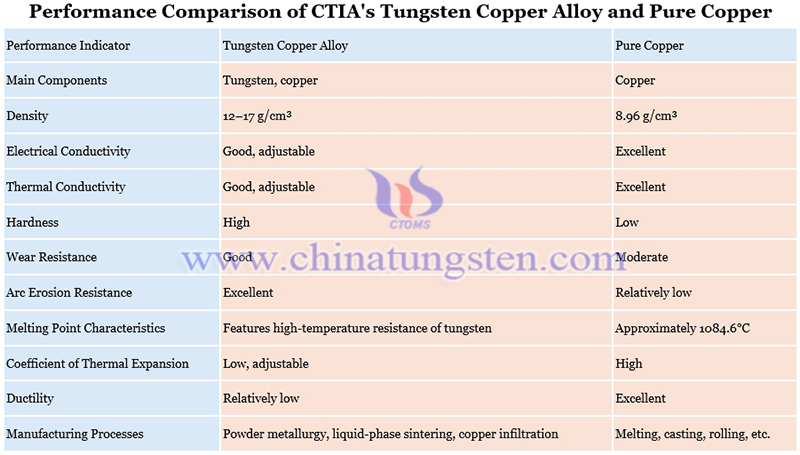
Different tungsten-to-copper ratios result in variations in density, electrical conductivity, thermal conductivity, and hardness. Performance comparison of CTIA's tungsten copper alloy and pure copper is shown in the picture below:
4. Application Differences Between Tungsten Copper Alloy and Pure Copper
CTIA provides corresponding tungsten copper material and machined product for different application scenario based on performance characteristic of both materials:
(1) Power Equipment: Tungsten copper alloy features good electrical conductivity, arc erosion resistance, and welding resistance, suitable for manufacturing high-voltage switch contact, vacuum contact, electrode, and other conductive part subjected to arc action. Pure copper is mainly used for conductive busbar, connector, busbar trunking, and current transmission part, meeting requirement of power equipment for low-resistance conductive structure.
(2) Electronic Packaging: Tungsten copper material features low coefficient of thermal expansion and good thermal conductivity, suitable for manufacturing power semiconductor packaging baseplate, heat sink, and electronic packaging submount. Pure copper exhibits excellent thermal conductivity and is commonly used for heat sink, heat-conducting plate, and heat exchange structure. Choice between both depends mainly on requirement of packaging structure for heat conduction efficiency and thermal expansion matching.
(3) Electrical Machining: Tungsten copper features high hardness, wear resistance, and electrical erosion resistance, suitable for manufacturing Electrical Discharge Machining (EDM) electrode and high-performance electrical machining tool. Pure copper offers good electrical conductivity and machinability and can also be used for EDM electrode, though under high wear and high-intensity discharge condition, its durability is typically inferior to tungsten copper alloy with appropriate material ratio.
(4) High-Temperature Industrial Equipment: Tungsten copper can withstand high temperature and intense thermal shock, suitable for arc welding electrode, resistance welding electrode, and other high-temperature conductive part. Pure copper is more suitable for equipment structure with relatively low temperature and high requirement on electrical and thermal conduction efficiency.
CTIA GROUP has nearly 30 years of experience in tungsten copper alloy manufacturing, with extensive expertise in powder metallurgy and precision machining, including liquid-phase sintering and copper infiltration. CTIA provides tungsten copper alloy products in various ratios, including W50Cu50, W70Cu30, W75Cu25, W80Cu20, and W90Cu10, along with material ratio design, structural optimization, specification customization, and precision machining to meet the stringent requirements for material performance, structural reliability, and dimensional accuracy in power equipment, advanced electronic packaging, precision electrical discharge machining, and high-temperature industrial equipment.
For any inquiry, please contact tungsten copper manufacturer: CTIA GROUP
Email: sales@chinatungsten.com
Tel: 0086 592 5129696 / 0086 592 5129595
Website: tungsten-copper.com
WeChat: